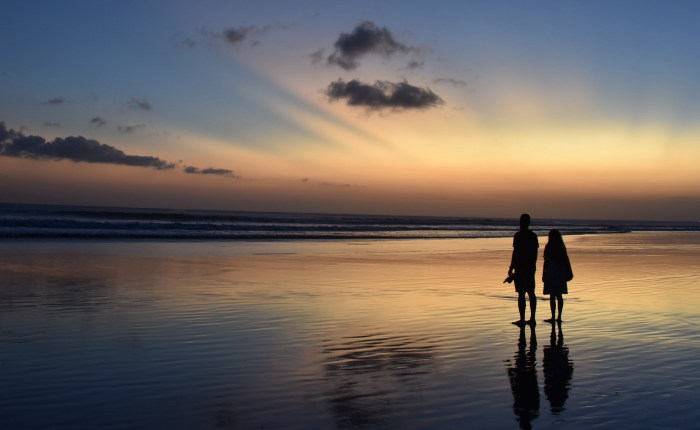
At the Edge of Two Worlds
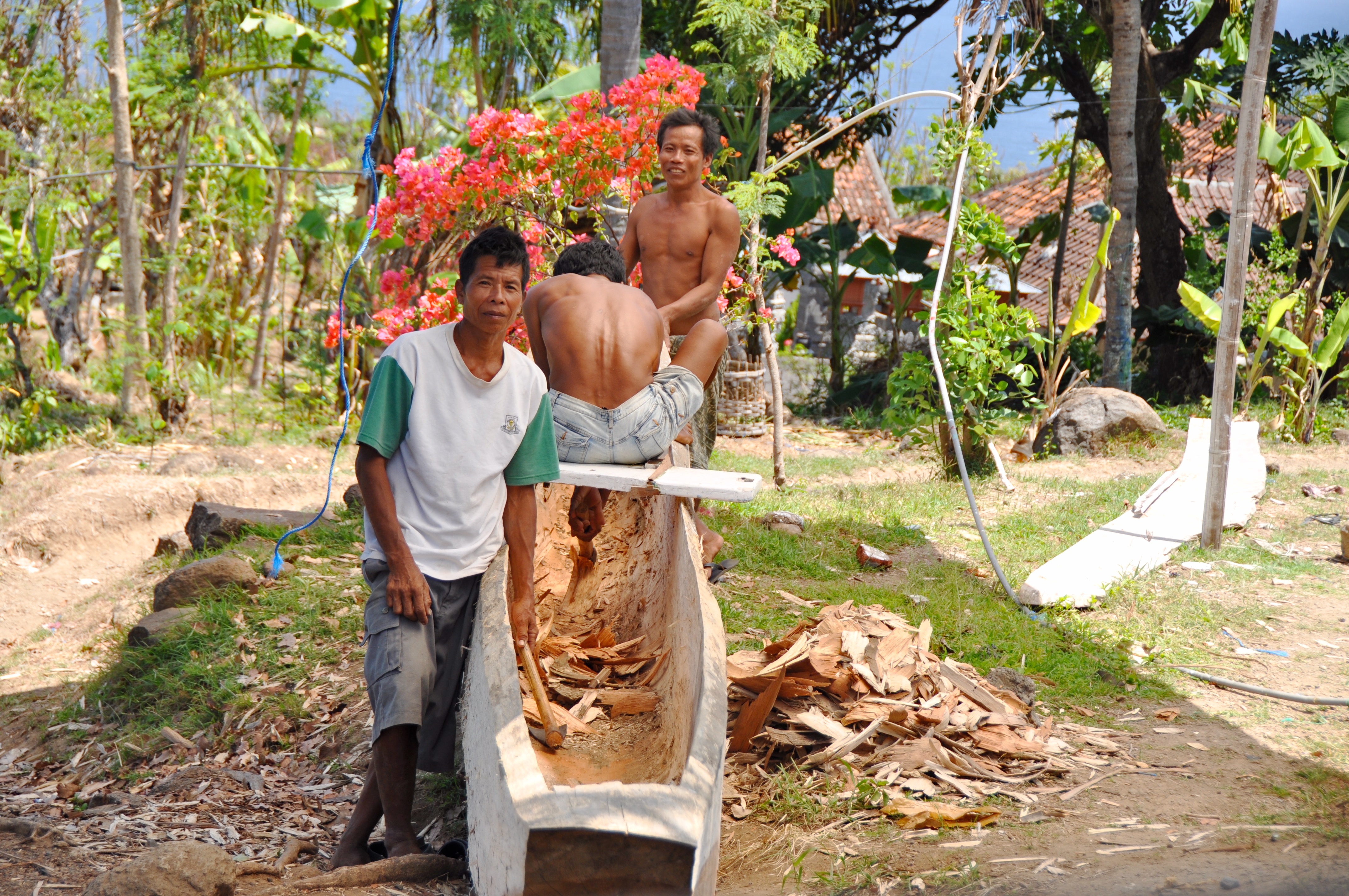
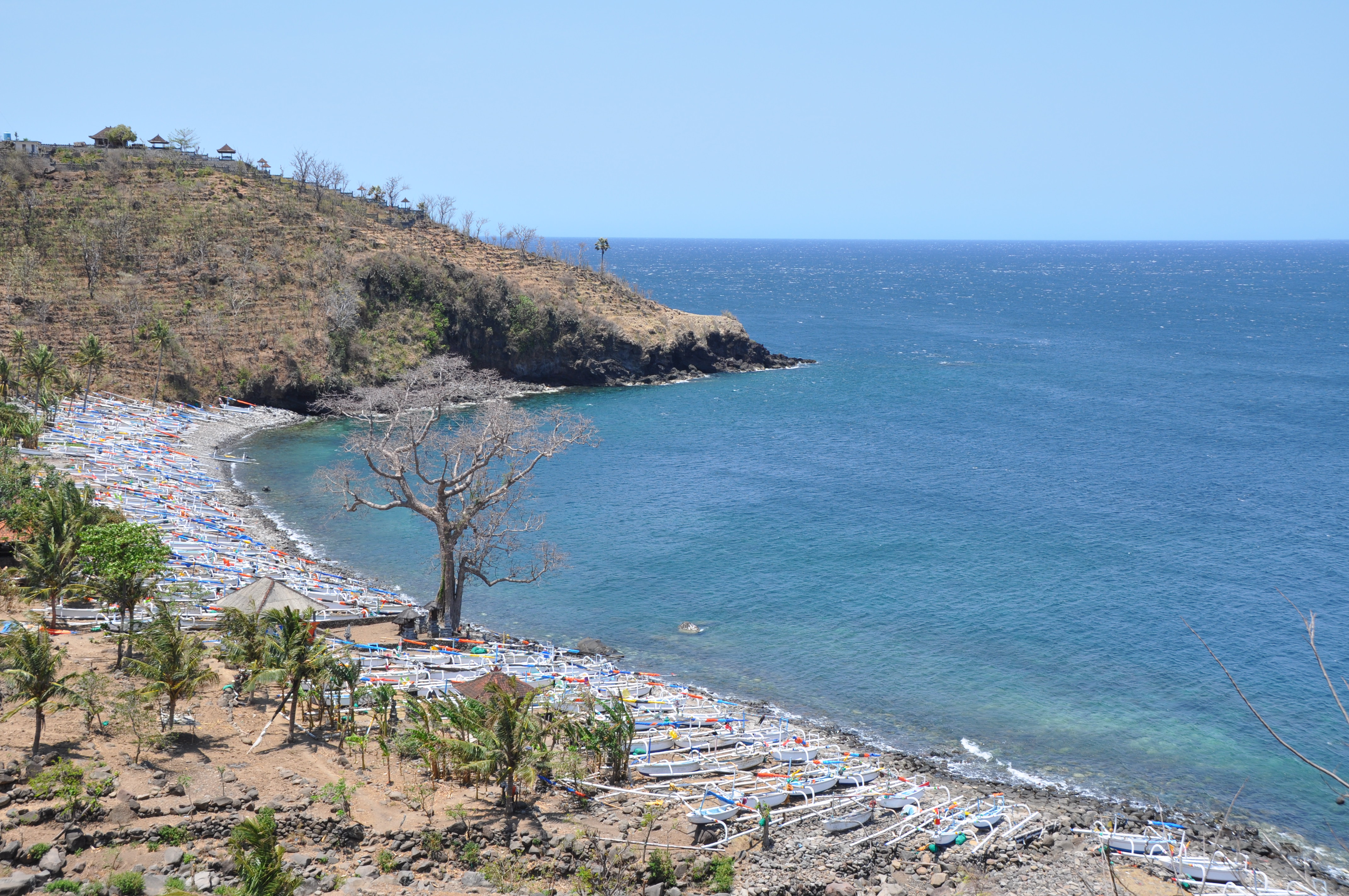
Amed is a fishing village on the far north-eastern tip of Bali, located where thousands of years ago the lava of Mount Agung first met the sea. The village clings to a dry, windswept spur that stretches into the Lombok Strait. In 1856, during a voyage through the strait, an English naturalist named Alfred Russel Wallace—precursor to Charles Darwin—noticed that the species he observed on Bali differed from those found on Lombok. He was the first to theorize that two ecosystems, separated by a narrow but difficult stretch of sea, could evolve independently, giving rise to distinct animal species. The imaginary line equidistant between Bali and Lombok still bears his name: the “Wallace Line.” Yet for the fishermen of Amed, Wallace’s theories matter little. From dawn until dusk, they are absorbed in launching their long, white outrigger canoes and filling their nets.
Fish thrive along the Wallace Line because the waters washing Bali’s eastern coast—from Amed down to the island of Penida—form a giant funnel that accelerates an oceanic current driving Pacific waters into the Indian Ocean. The waters are rich in oxygen and micro-organisms that ultimately feed all species up in the marine ecosystem. Penida is an exceptional drift diving site: the moment one descends, a powerful current seizes the diver and carries him for kilometers. Along the way, life teems upon the rocky walls gliding past, like watching a landscape through a train window.

Back in Amed, the slow rhythm of life unfolds each afternoon as the fishermen’s wives and villagers descend to the beach to haul the boats ashore. The day’s catch arrives in baskets, forming a shimmering silver chain like the mackerel skin that glitters across the vendors’ stalls aligned along the coastal road. Over the years, fishermen have watched their village fill with hotels, dive centers, and restaurants. They observe the changes with relative detachment: the canoes still line up side by side after each fishing trip, and every morning they vanish offshore, pushed by the breeze caught in their triangular sails. Tourists have begun to arrive, drawn by this rugged, sun-drenched coast. Local women welcome them warmly, offering souvenirs, textiles and massages. My impression is that the villagers regard tourists as something inevitable—like the rough seas that, at times, keep boats at shore. The fishermen seem suspended like tightrope walkers on their boat outriggers, pressed on one side by the storm of mass tourism and on the other by the sea in turmoil. They know visitors come, stay a few days, and then drift away. But if the fish were ever to disappear, everything would collapse. And so, for fish to stay in balance with fishermen—and for tourists to keep arriving, but above all to keep leaving—ritual ceremonies mark the days, the seasons, and the lives of Amed, as they do everywhere in Bali.
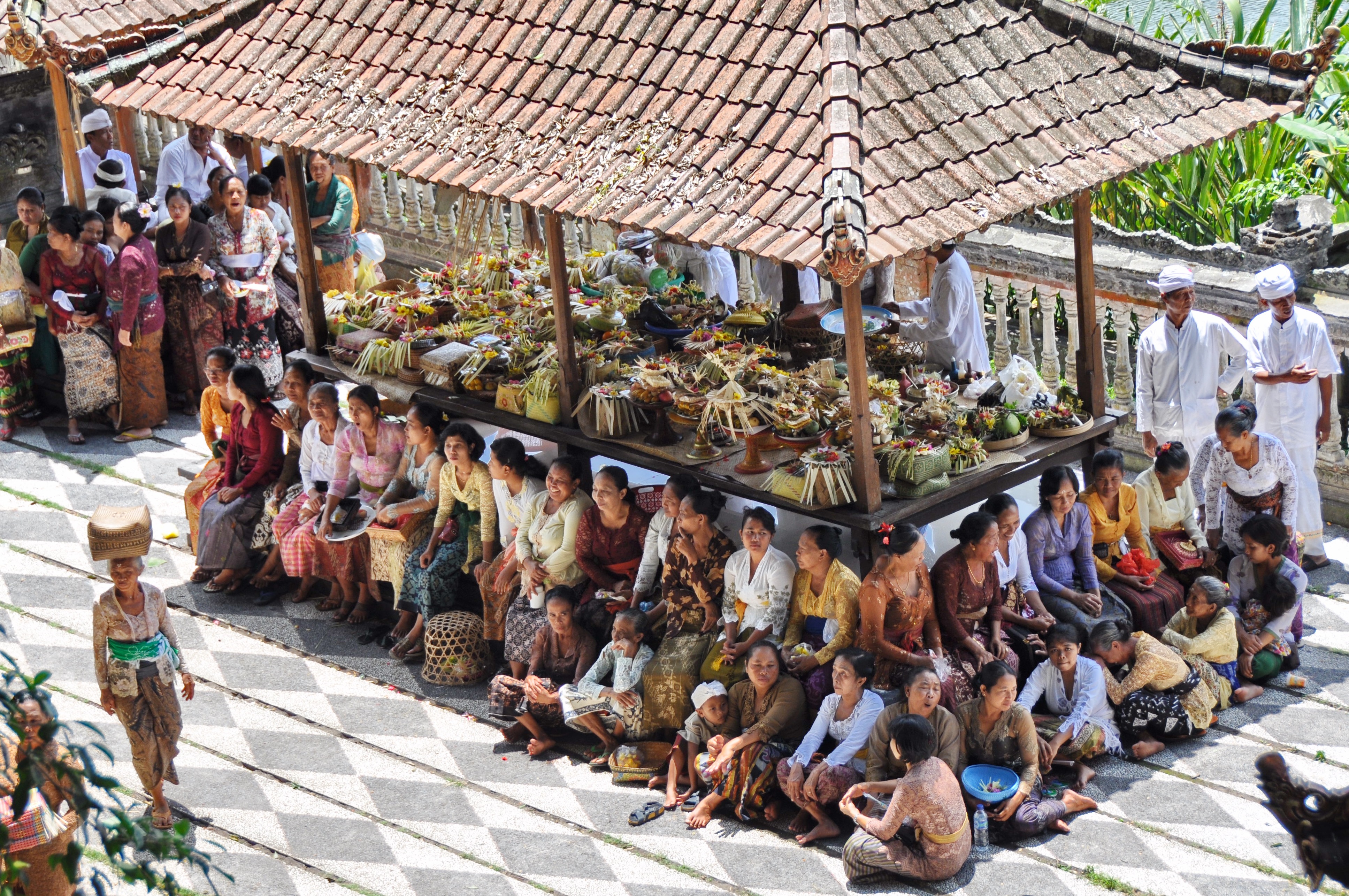
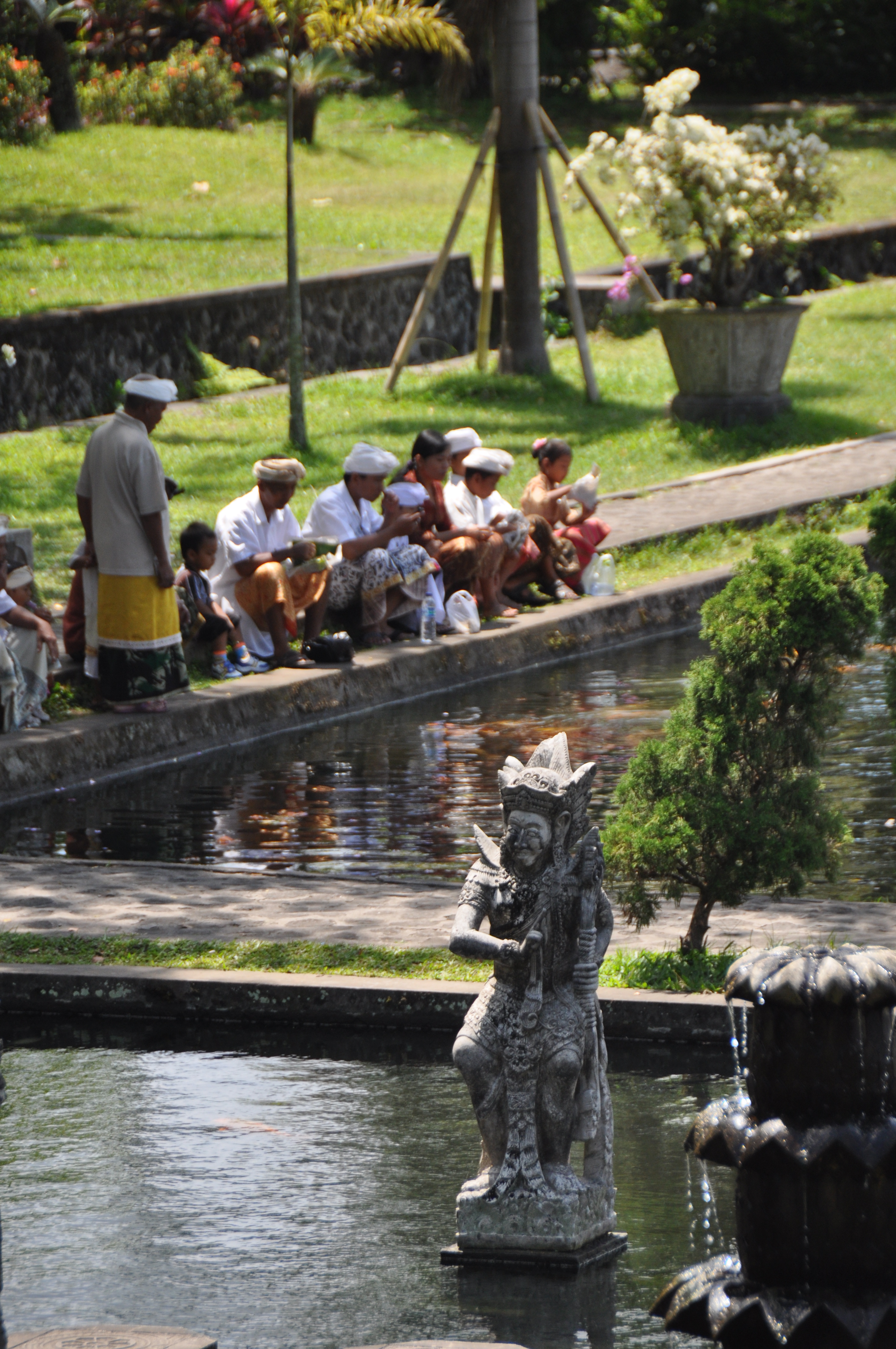


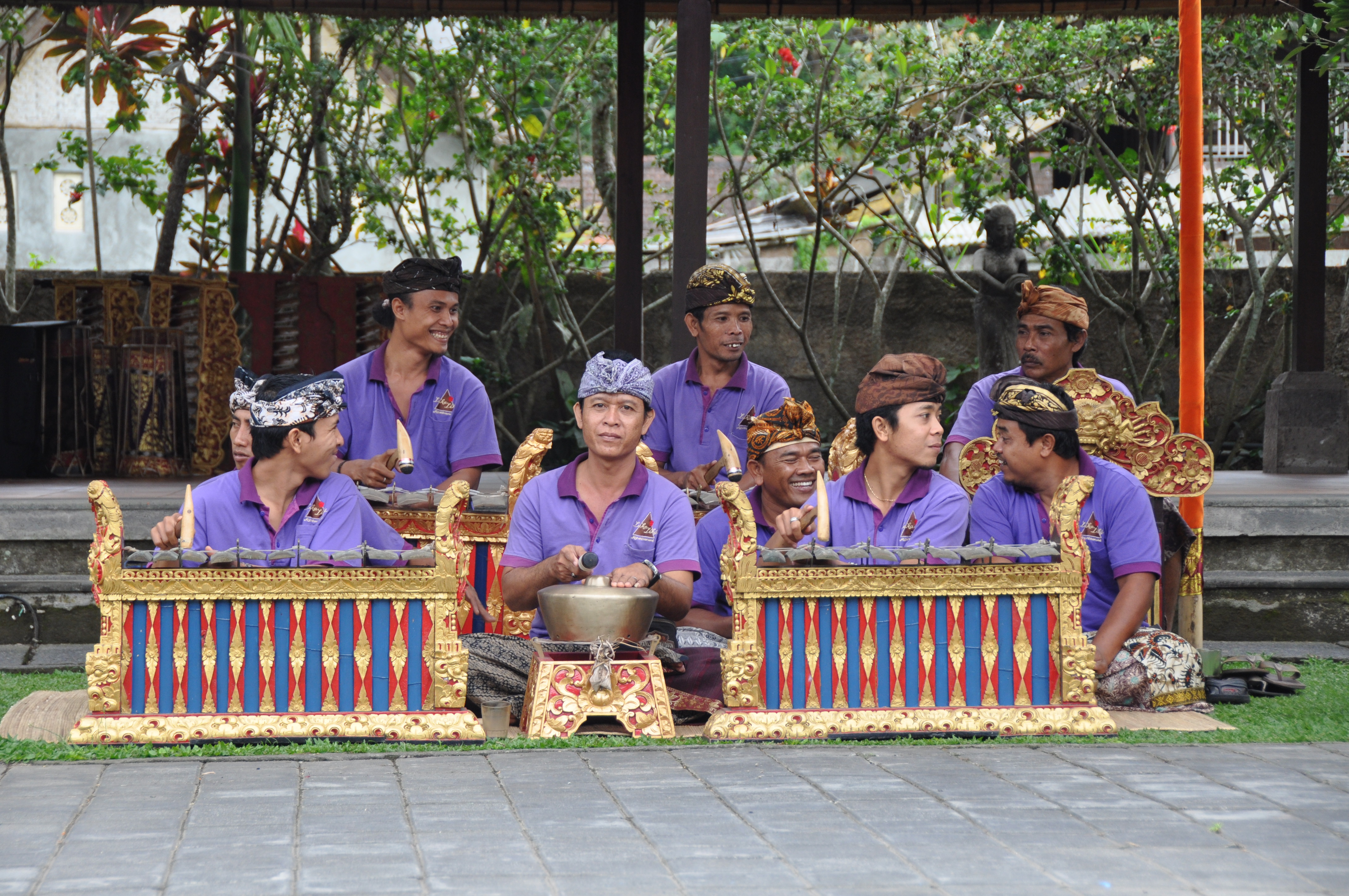
Once, I was invited to a ceremony in which the coastal communities pray to the sea deities for abundant fishing. It lasted three days and nights, and everyone from the surrounding villages passed through. The women stayed together while the men indulged in decidedly unspiritual pursuits—massively drinking arak and gambling. Ritual offerings were neatly arranged on a long table: rice, cigarettes, biscuits, roasted ducks, elaborate constructions of fruit. The gamelan punctuated the sacred man’s invocations, and every so often the men pressed their Kris daggers against their ribs, swaying to the steady clang of cymbals, pushing the blades to prove their courage. Given the amount of arak they had consumed, I worried—but the dances ended without incident.
Who Created Humans?
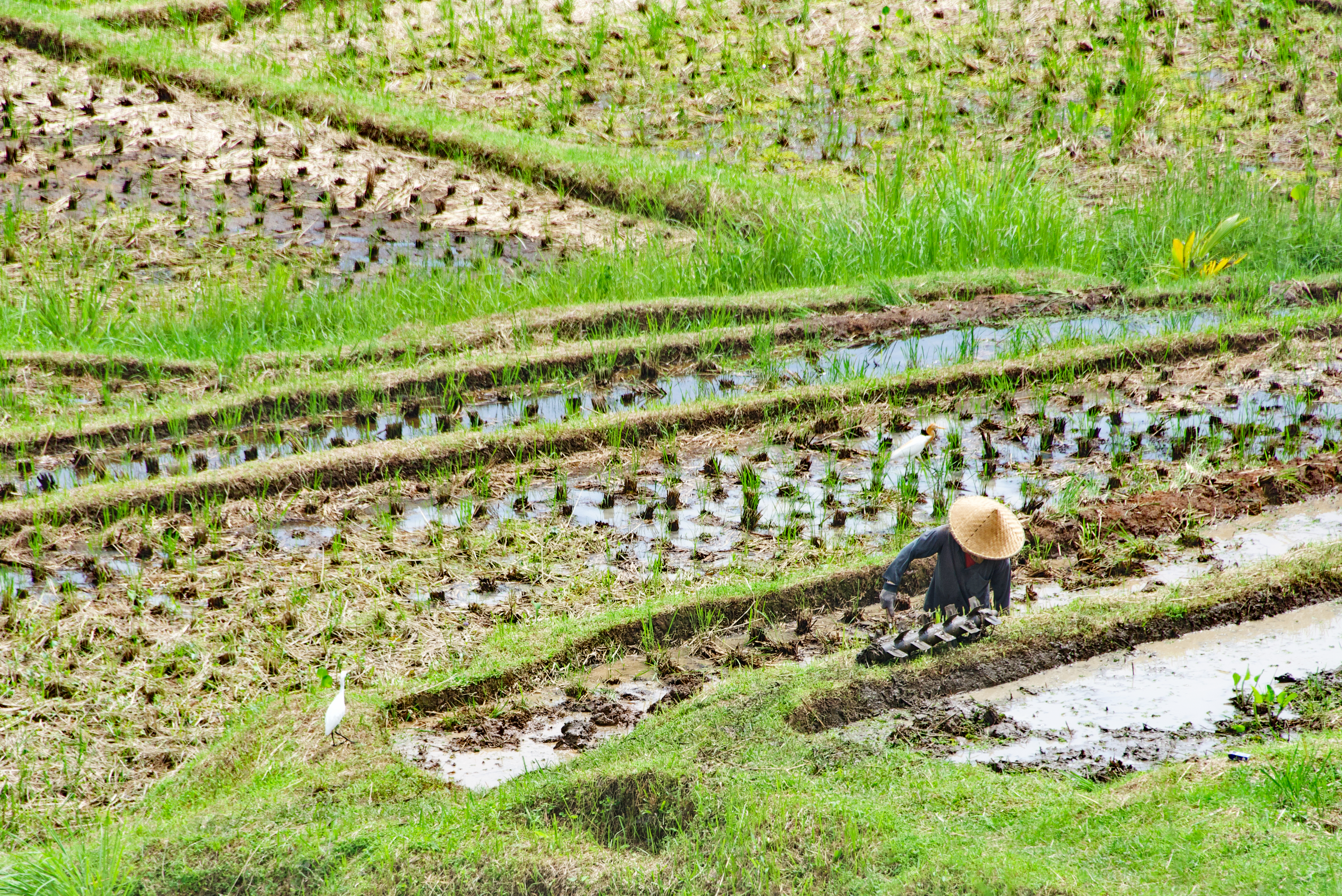
While absentmindedly snapping selfies with their phones, tourists often overlook the bright white canoes poised above the deep blue of the tumultuous ocean currents, the farmers aligning seedlings in sunlit rice paddies, the women laying ritual offerings with graceful, precise movements. Considering these figures simply as part of a backdrop is an unforgivable mistake, as each one of them is playing a role in the continuity of Balinese civilization and humanity as a whole. It is the fishermen, the women in embroidered garments, the bent-backed farmers who preserve with quiet elegance the equilibrium among all the forces that animate the universe.
Let’s take a closer look at these supernatural forces, starting with a loaded question: who created humans, and thus Balinese civilization? As the island is predominantly Hindu, the answer is not a single god. Brahma, Vishnu, and Shiva shared the task. Brahma the Creator shaped bones, flesh, nerves, and body temperature. Vishnu the Protector formed blood, bone marrow, fat, glands, and bodily fluids. Shiva the Destroyer infused breath, creating the transient bond between human body and soul.

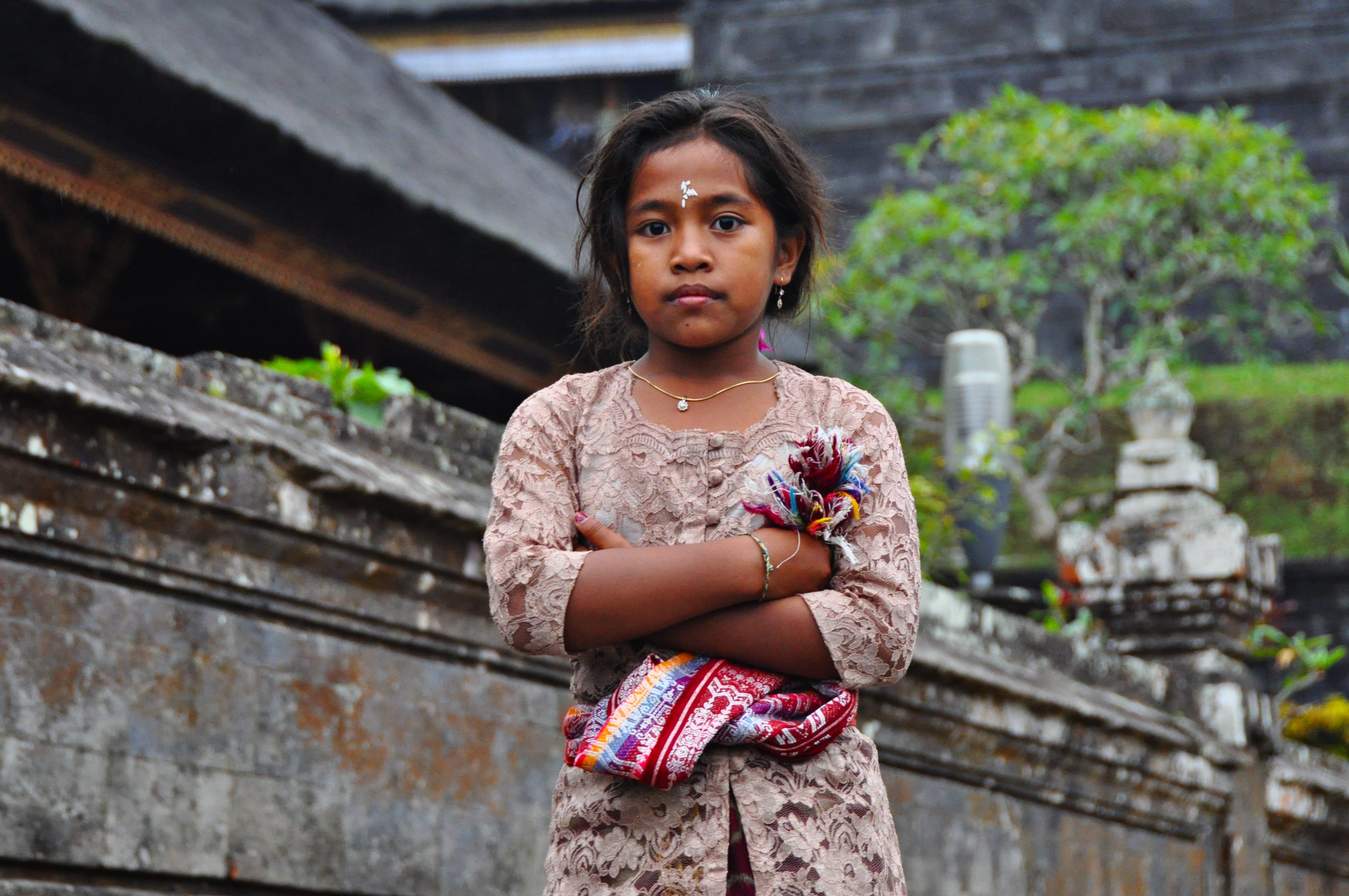



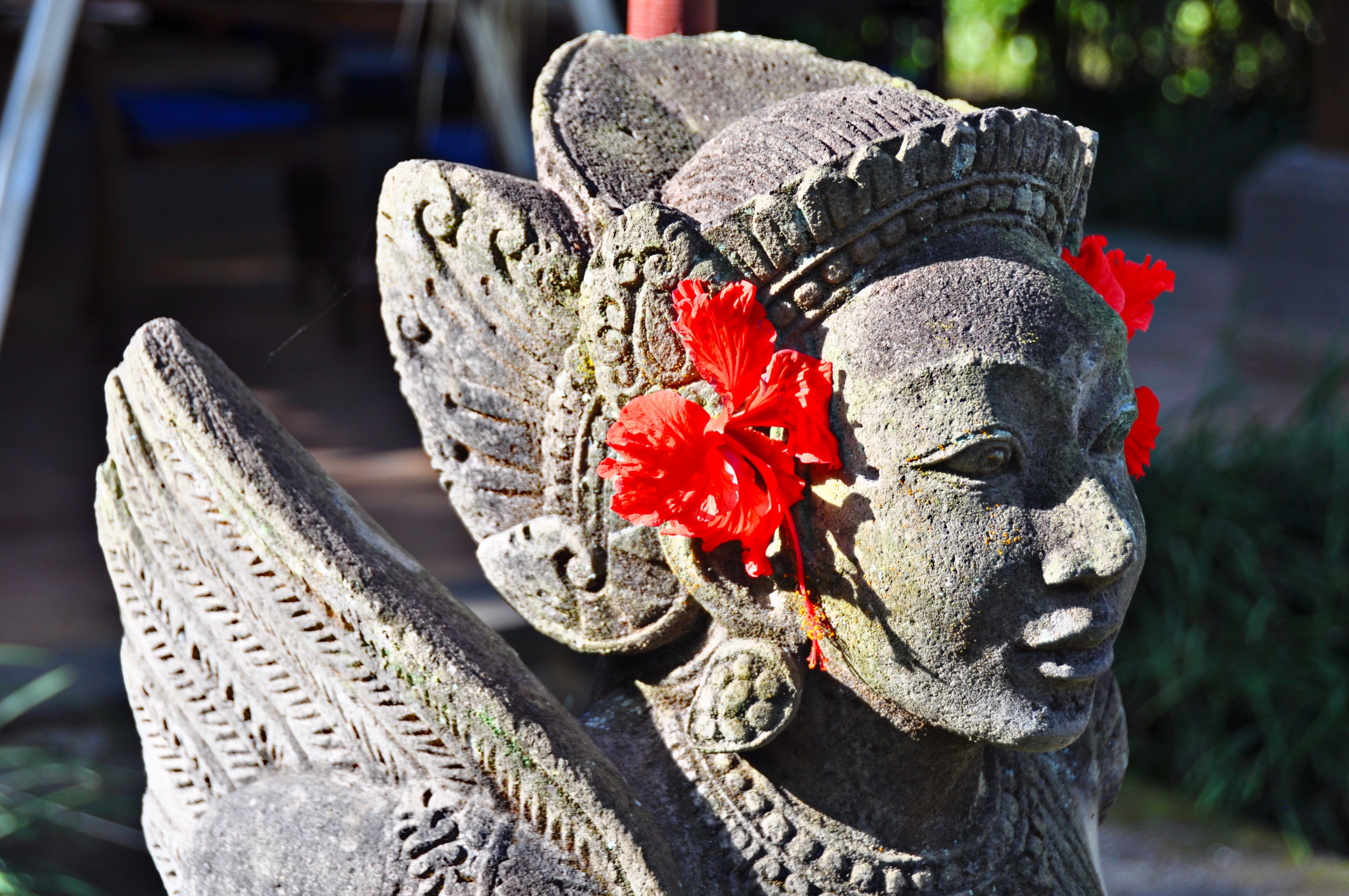
Traditional Hinduism places Brahma, Vishnu, and Shiva atop Mount Meru, but Bali’s own deities frayed themselves a path to the gods kingdom and found space alongside them. Barong, the forest spirit, embodies good; Rangda, a witch-like creature, symbolizes evil. Dewi Sri, goddess of rice and fertility, is worshipped by the members of the subak, the cooperatives that have managed irrigation since ancient times. Other Hindu gods are equally revered and help men in many ways in return: Ganesha removes obstacles; Saraswati brings wisdom and protects the arts; Lakshmi encourages prosperity; Surya ensures that the sun rises; Indra brings rain. The courage and loyalty of Hanuman, the heroic monkey god of the Ramayana, earned him an important place in Balinese lore. His images are common in the forests, where monkeys—his helpers—are protected and honoured as sacred beings, guarding cosmic order from chaos. Agni, the fire god, plays a central role in Balinese cremation rites: through his flames, he purifies the body and frees the soul, guiding it toward its meeting with the gods.
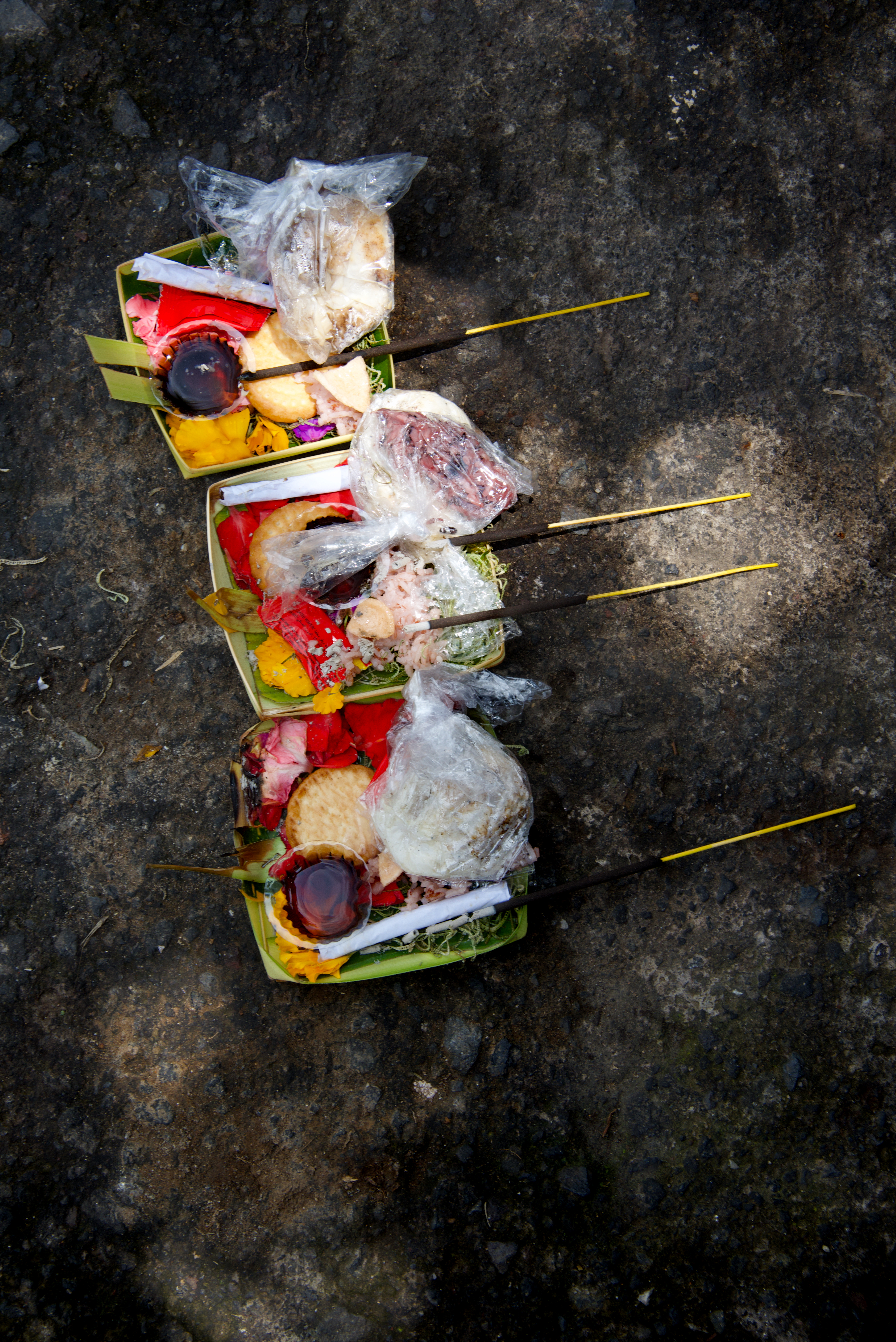
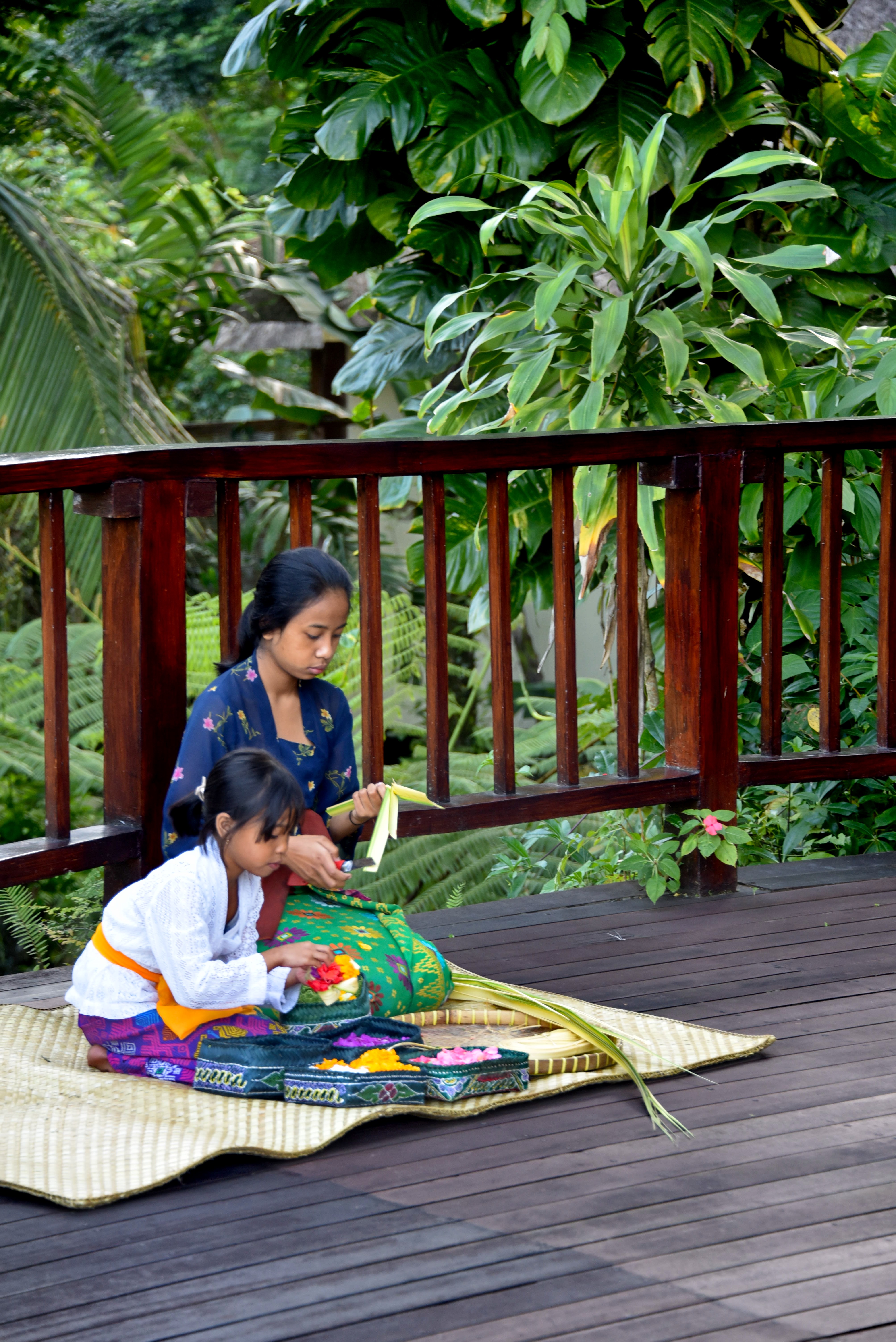
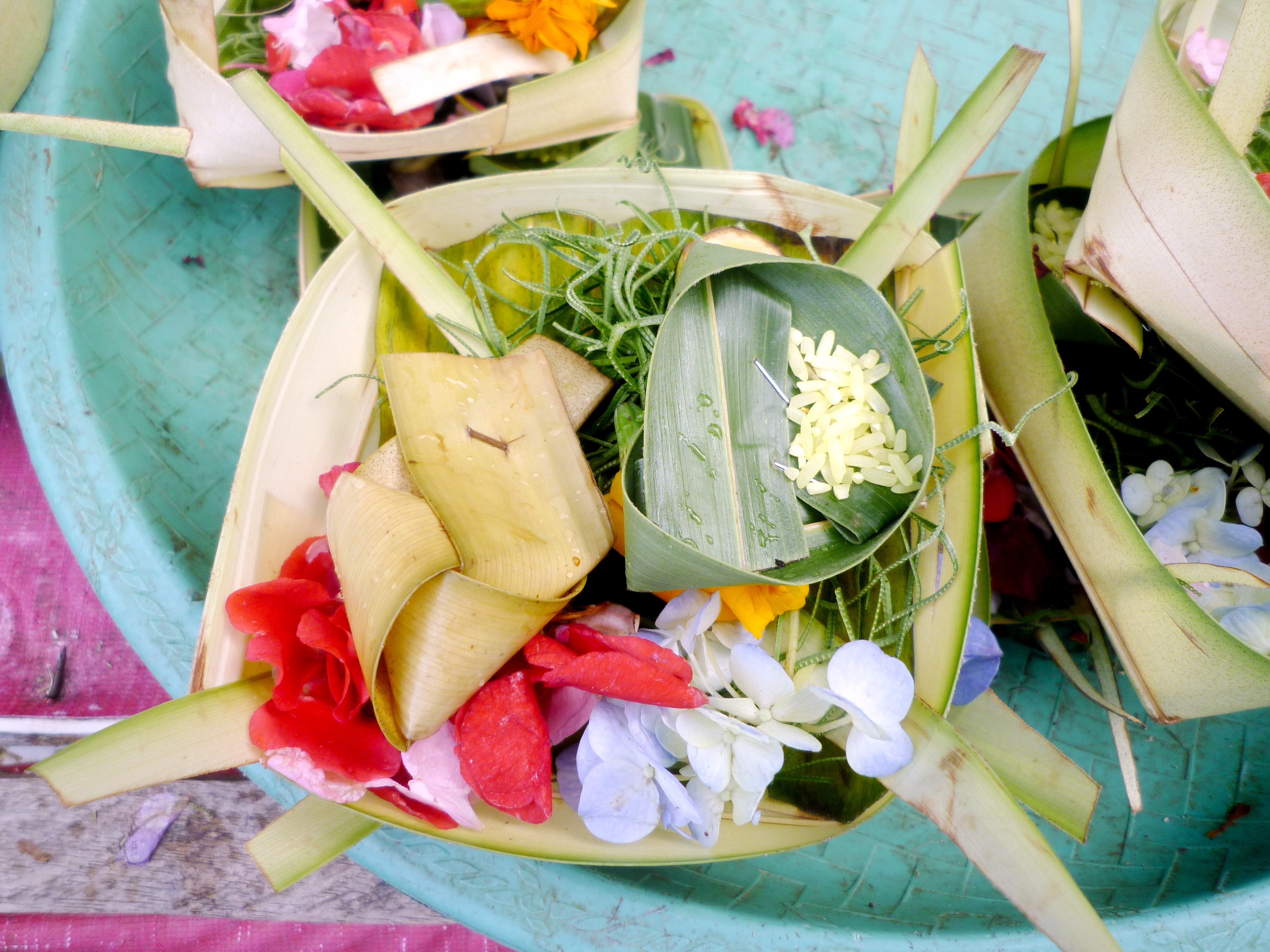
For the brief span of their lives, humans inhabit the middle world and guard the harmony between the manifestations of gods and those of the underworld. For this reason, Balinese people pray in their temples first with their heads raised toward the sky, then with their foreheads lowered to the ground. The living, through offerings and ritual ceremonies, support the souls of the dead as they undergo purification—until the day when, fully purified, they will join the family’s cosmology to be venerated in ancestral shrines. Because divine, spiritual, and demonic forces manifest as trees, springs, mountains, rivers, or simple tools, they must be honoured not only in temples but throughout all aspects of daily life. Many times a day, everywhere across the island, the ritual of placing small basket-shaped offerings called Canang Sari (“the essence of the offering”) is repeated—on doorsteps, in shops, on statues, on cars, at the base of sacred trees. The harmonious arrangement of objects and colours is designed to please the Gods and keep peace on earth: a white lime is for Shiva, a red betel leaf for Vishnu, a green Gambier leaf for Brahma. White petals to the east honour Iswara; red petals to the south are for Brahma; yellow flowers to the west go to Mahadeva; blue or green blossoms to the north honour Vishnu. A coin or banknote is often placed last, symbolizing generosity. Women compose the Canang Sari, often together. It is an activity that spans generations and binds communities. Each offering is unique; its creation is meditative, and once placed, it contributes to the island’s quiet beauty. It lasts one day, and the ritual has continued unchanged for more than a thousand years.
When Men and Spirits Walk the Same Streets
The intricate links between everyday objects, sacred texts like the Ramayana and Mahabharata, Balinese legends, natural phenomena interpreted as interactions between upper-world and lower-world forces, and ceremonies that mark the passing of time, all combine to form a cosmic map extending from one’s doorstep to the stars. Through this path where ordinary and extraordinary are constantly intertwined, Balinese people navigate events that would be hard to fathom otherwise. When a Balinese person meets you, they will ask where you come from and where you are going. Your answer helps situate your path along the lines of the universe and understand what role you might play in the elaborate designs of gods and demons on earth.
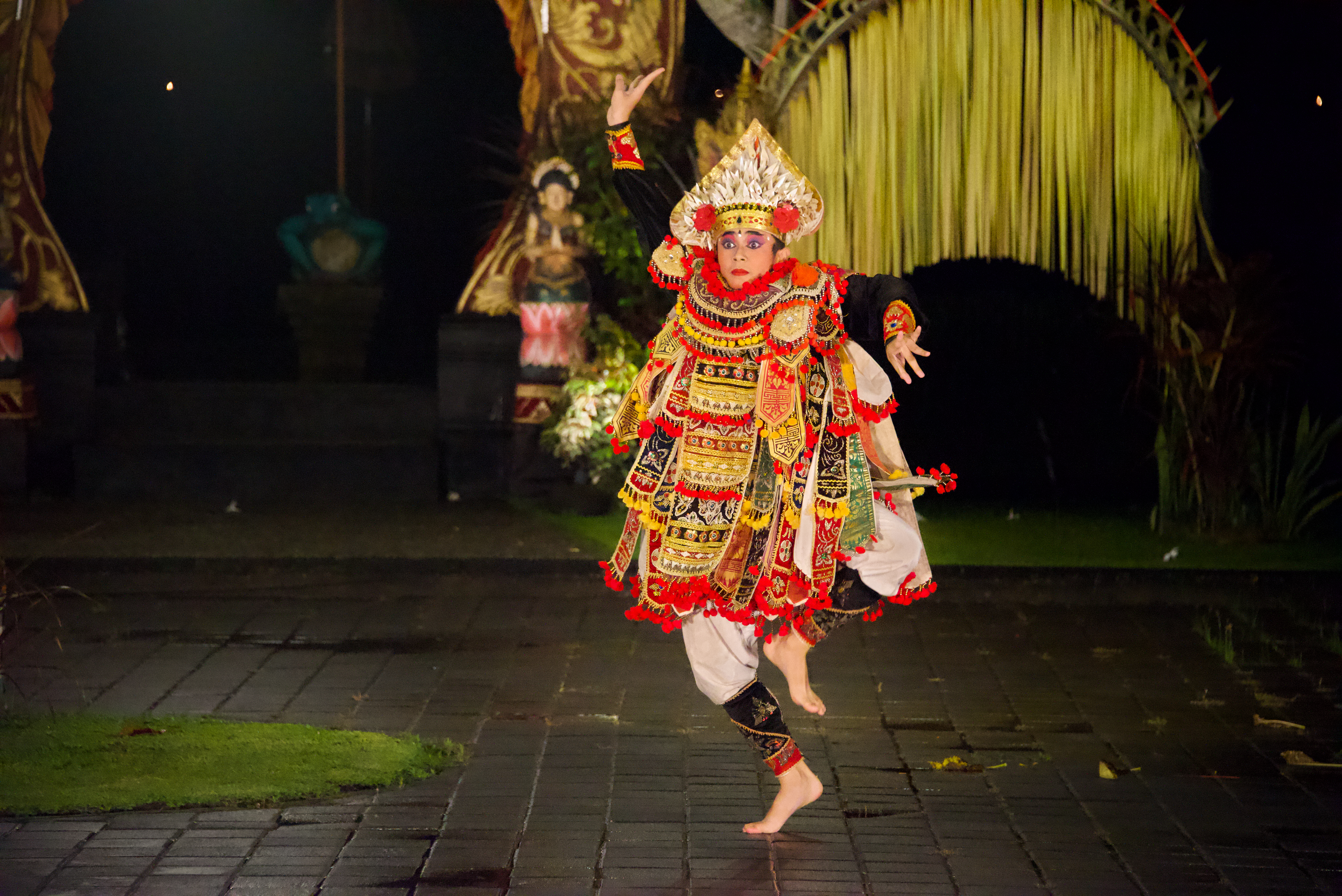
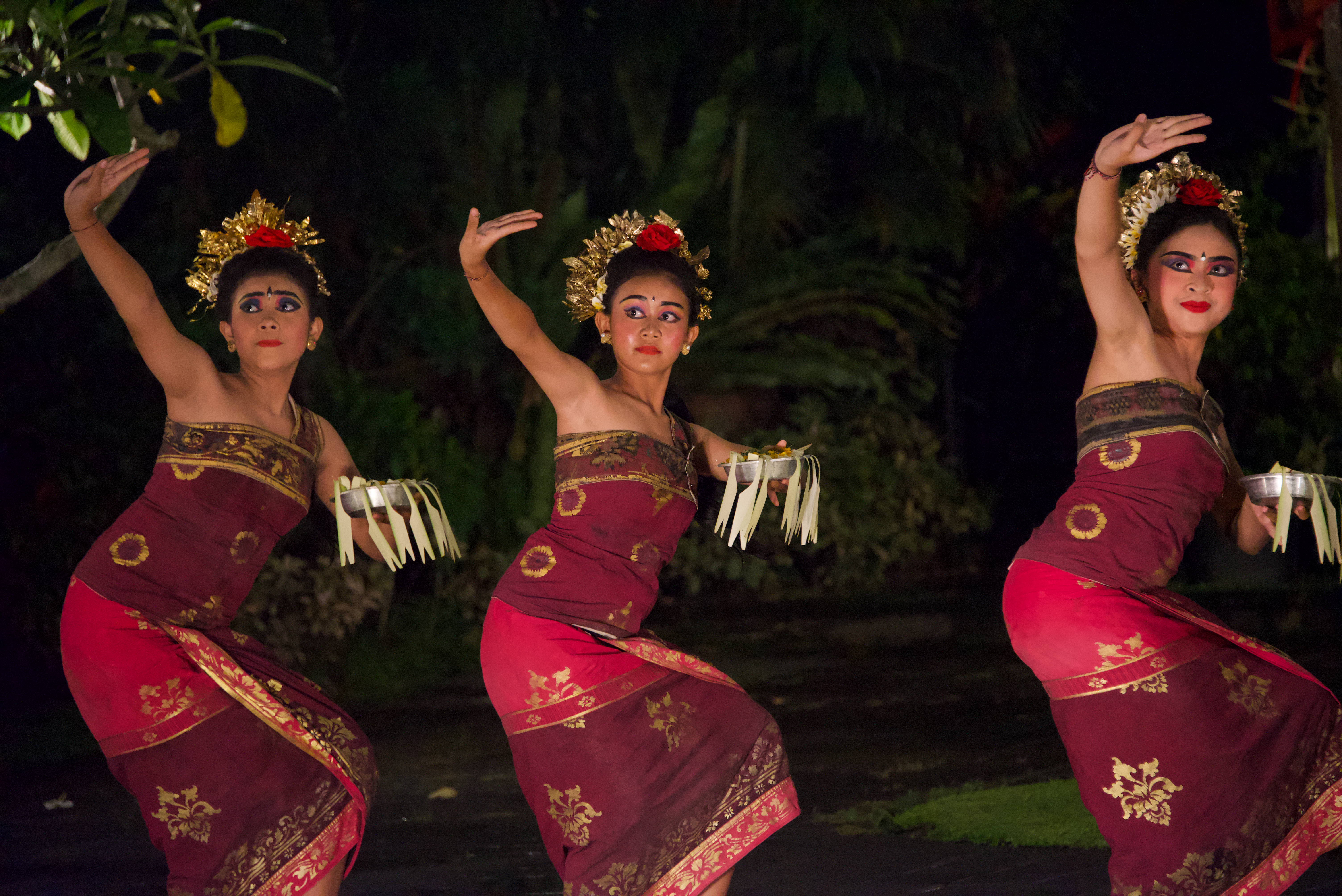

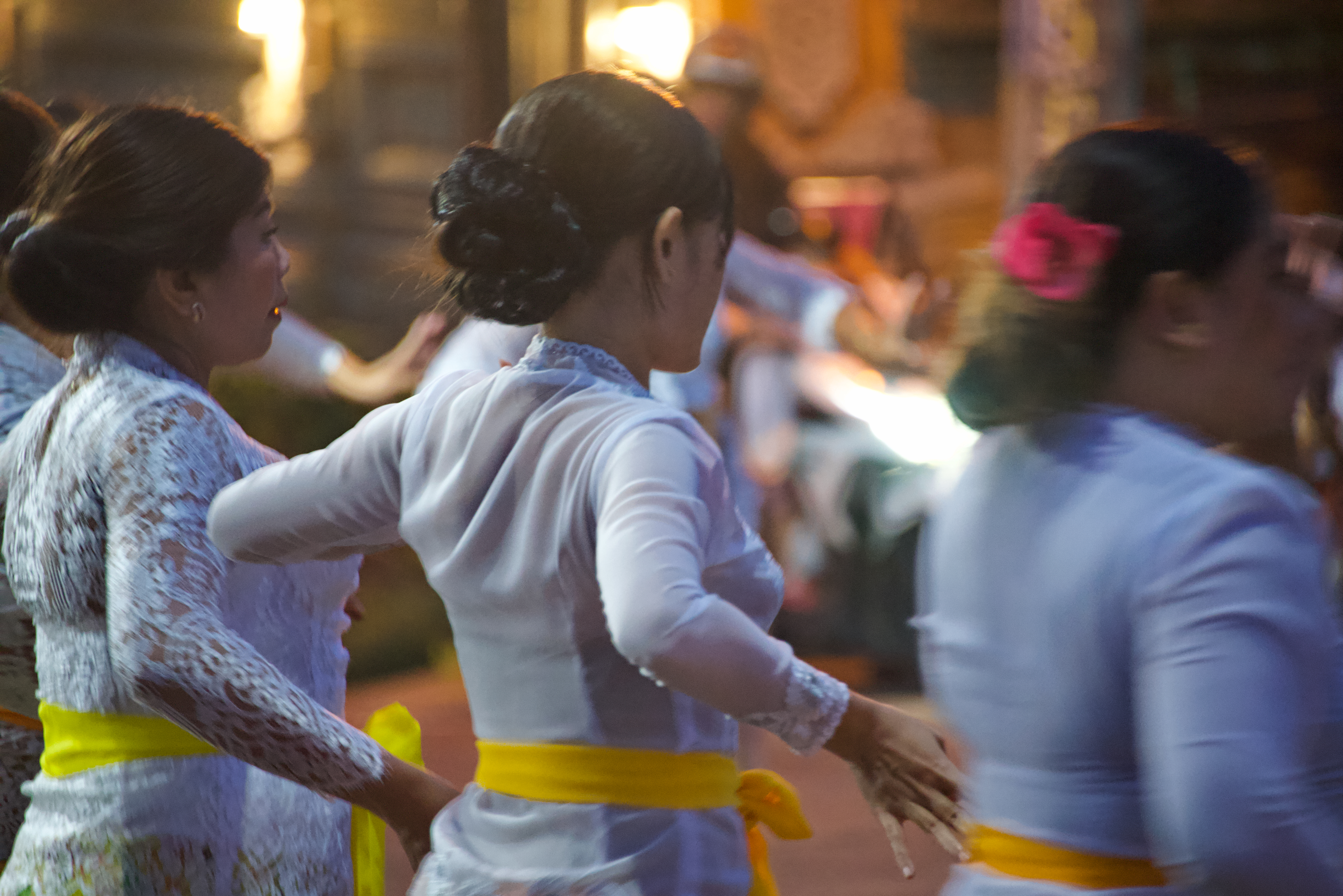


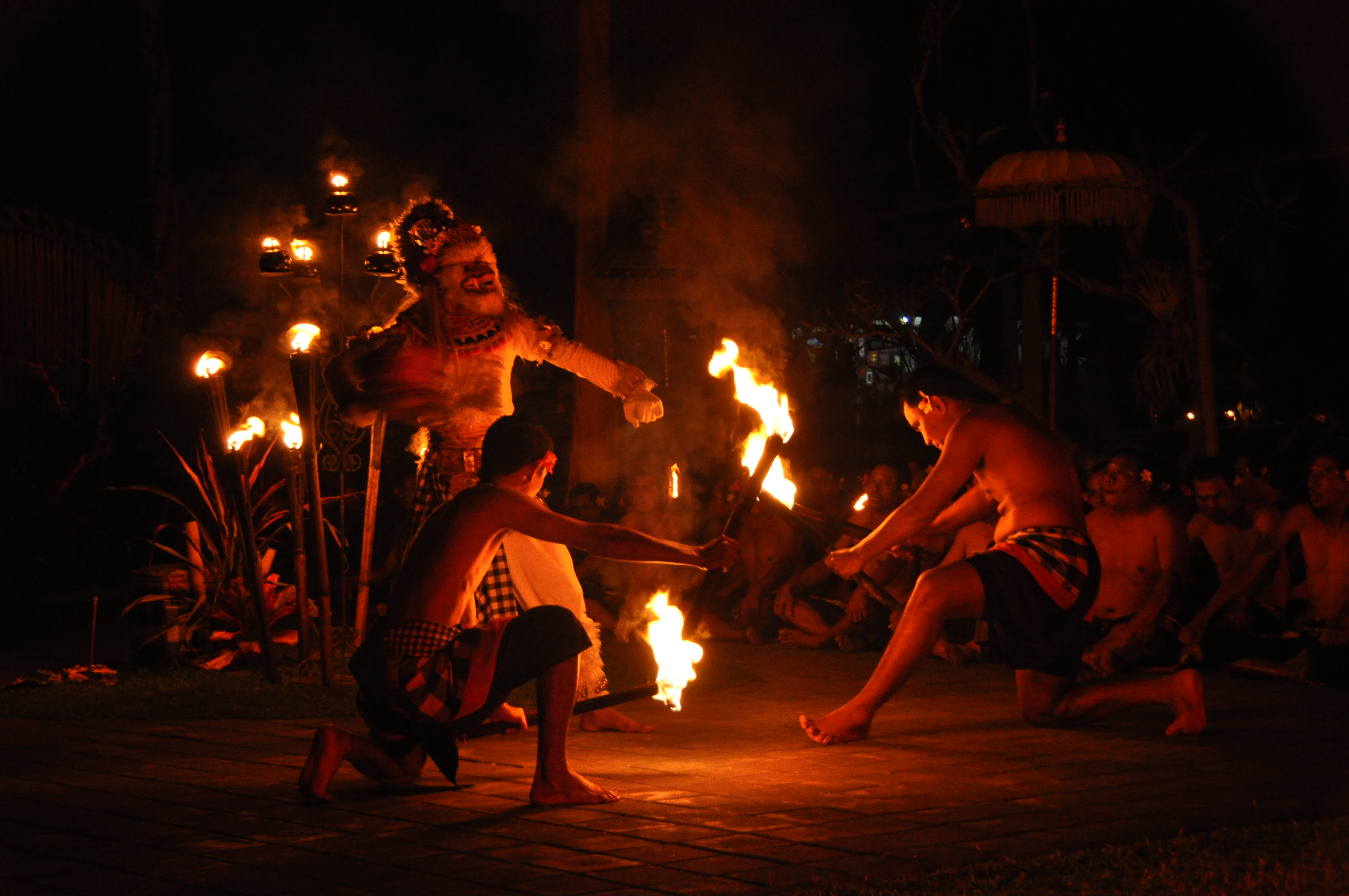
Anyone who visited Bali knows it is a crowded island. Tourists and foreigners who have made it their home add to a substantial local population. What many visitors don’t realize is that the overcrowding doesn’t concern humans alone: spirits, ghosts, ancestors, monsters, gods, and magical beings have always shared the same streets, mountains, waterfalls, and beaches where people gather today. Yet there is one day when spirits and gods have the entire island to themselves. It is called Nyepi, and it falls on the last day of the Balinese calendar. During Nyepi, a strict rule is observed: humans must stay indoors, silent and in darkness. Activities like watching television, using the internet, or listening to music are forbidden everywhere—though foreigners are granted some leniency, provided they stay inside. As even the airspace is closed during Nyepi, the streets are completely empty and silence reigns everywhere. For one day, while mortals sit in their homes reflecting on their fragile coexistence with supernatural beings, the latter claim the island entirely, savouring its indescribable calm. While they wander without disturbance, they must rejoice of what they see, as peaceful beauty is everywhere.
 Living Colors Studio